

News
CONTACT US
National Marketing Hotline:
International Sales Hotline:
After-sales Hotline:
Contact Email:
Contact Address:
NO.977 Qingwei Road, Jimo District, Qingdao City
Aerial vehicle troubleshooting
Release time:
2025-08-29
Data source:
I. Classification of aerial platform failures 1. Mechanical failure: refers to damage or failure of aerial platform components, such as damage to motors, pumps and other mechanical components. 2. Electrical failure: refers to problems with the aerial platform's electrical system, such as circuit failure, electrical failure, poor line contact, etc.
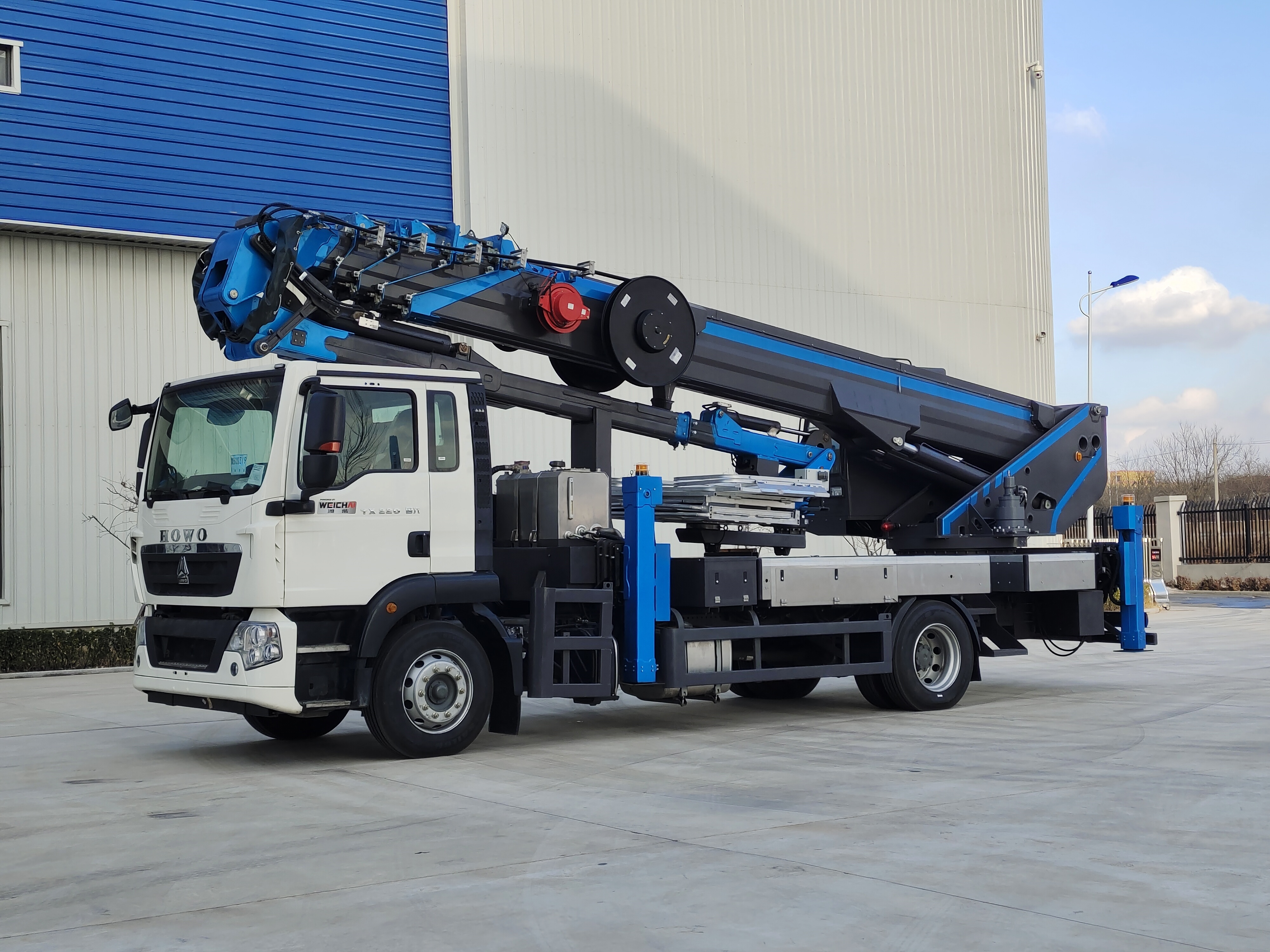
I. Classification of aerial platform failures
1. Mechanical failure: refers to damage or failure of aerial platform components, such as damage to motors, pumps and other mechanical components.
2. Electrical failure: refers to problems with the aerial platform's electrical system, such as circuit failure, electrical failure, poor line contact, etc.
3. Hydraulic failure: refers to problems with the aerial platform's hydraulic system or partial leakage, loose pipes, etc.
II. Common aerial platform failure treatment methods
1. Mechanical failure treatment methods:
(1) Adjust the air pressure of the aerial platform's drive wheel. Sufficient air pressure is conducive to better performance of the aerial platform during operation.
(2) Check the installation status of the main components of the aerial platform, such as whether the motor is operating normally and whether the transmission parts are operating smoothly.
2. Electrical failure treatment methods:
(1) Check whether the aerial platform circuit is normal and whether the electrical equipment is damaged or failed.
(2) Repair the aerial platform's electrical system and replace damaged electrical appliances.
3. Hydraulic fault handling methods:
(1) Check whether the hydraulic system of the aerial work platform is leaking or the pipes are loose.
(2) Clean the hydraulic pipes in time and enhance the sealing performance of the pipe joint sealing materials.
III. Prevention measures for aerial work platform faults
1. Strengthen daily maintenance: Regularly check the various parts of the aerial work platform, and do a good job of cleaning and lubricating to reduce the occurrence of mechanical, electrical, hydraulic and other faults.
2. Precautions for use: When operating the aerial work platform, be careful not to overload, exceed the operating time, over-operate and other incorrect operations to avoid safety hazards and faults.
IV. Conclusion
Troubleshooting aerial work platform faults is an important task in aerial work. This article provides a detailed introduction from the aspects of fault types, handling methods, and preventive measures. It is hoped that readers can learn more about aerial work platform fault handling methods and enhance the safety of aerial work.
Other News
Proper maintenance is essential for ensuring stable concrete discharge, minimizing downtime, and extending the service life of a pump truck.
How to Prevent Concrete Pump Truck Overturning: 4 Essential Safety Measures
Key points to help prevent small concrete pump trucks from tipping over.
Prevent Concrete Pump Blockages and Life-Threatening Safety Hazards: Do Not Pump These Materials
To help construction teams standardize operations, extend equipment lifespan, and mitigate risks, we have compiled a list of materials that must never be pumped using concrete delivery pumps.
A High-Performance Powerhouse for Faster Concrete Pouring: JIUHE Trailer Concrete Pumps
With over two decades of expertise in pumping equipment, Jiuhe Heavy Industry leverages cutting-edge technology to refine a comprehensive range of concrete pumps.
Operational Details for Trailer Type Concrete Conveying Pumps
Based on years of R&D and manufacturing experience, Jiuhe Heavy Industry identifies the following key operational details for small concrete delivery pumps:
JIUHE Truck-mounted concrete pump
With the rapid development of the construction industry, methods for transporting concrete are constantly evolving. In the past, stationary concrete pumps (or "trailer concrete pumps") were the primary method, but truck-mounted concrete pumps ( also called "concrete line pump" )have now gradually become the mainstream choice.
Precautions for the Use of Trailer Mounted Concrete Pumps
The trailer-mounted concrete pump is a very common piece of construction equipment; favored by contractors for its compact size, ease of transport, and cost-effectiveness.
What causes the S-pipe of a concrete pump to not swing properly?
The S-tube is a crucial component of a concrete boom pump. Its primary function is to connect the boom's piping to the concrete delivery cylinder, enabling continuous concrete pumping.