

News
CONTACT US
National Marketing Hotline:
International Sales Hotline:
After-sales Hotline:
Contact Email:
Contact Address:
NO.977 Qingwei Road, Jimo District, Qingdao City
Mastering Hose Operations for Concrete Pump Trucks
Release time:
2025-06-16
Data source:
To ensure that concrete can be smoothly mixed from raw materials to evenly pumped to the pouring site, the operator needs to be proficient in the operation of each step, and the construction safety precautions of each step should also be kept in mind to avoid safety hazards.
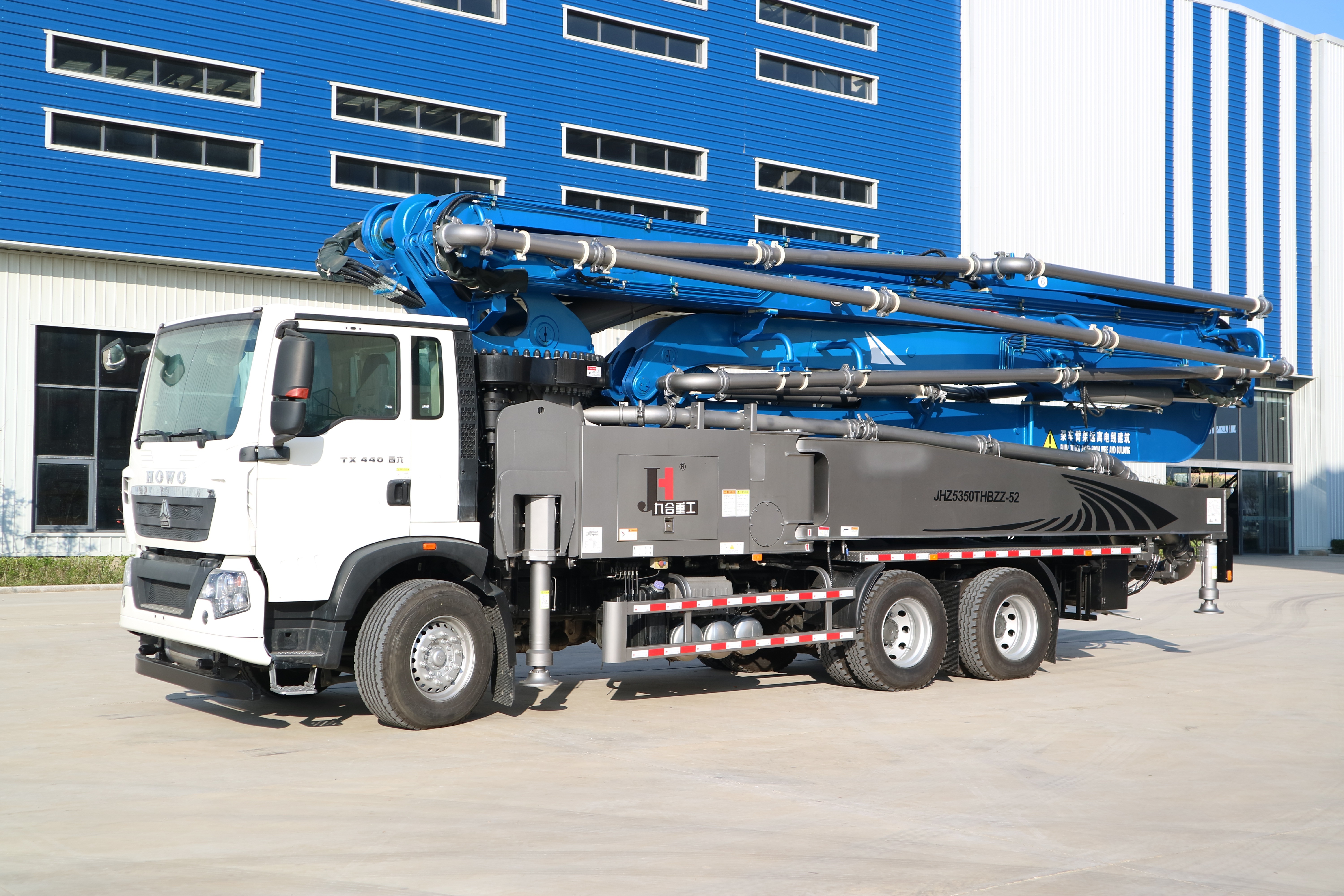
To ensure that concrete can be smoothly mixed from raw materials to evenly pumped to the pouring site, the operator needs to be proficient in the operation of each step, and the construction safety precautions of each step should also be kept in mind to avoid safety hazards.
The following three operating details should be paid attention to during the hose operation process:
1. Contact the front hose operator when starting or stopping pumping concrete. The bending radius of the front hose should be greater than 1m, and the operator is not allowed to stand at the outlet of the pipe to prevent the concrete from suddenly spraying out and injuring people.
2. The delivery pipeline should be fixed and padded, and it is strictly forbidden to bend the delivery hose to avoid hose explosion. When the pipeline is blocked, the end of the soft joint will swing rapidly when it is pumped after treatment, and the concrete may be sprayed instantly. The staff should not approach the hose.
3. Never stand at the corner of the building and hold the end hose in your hand. The shaking of the hose or the spraying of concrete may cause the operator to fall from the building.
Before pumping concrete, first pump clean water, check each pipe clamp to ensure that the seal is not leaking, and then pump pipeline lubricant, generally mortar, or cement slurry. Pour the mortar into the hopper for pressure feeding. When the mortar is about to be pressure fed, pour the concrete that meets the requirements for normal pressure feeding. If the mortar is blocked, remove the first section of the pipe, take out the dehydration block inside, connect the pipe, and it can operate normally.
When the drag pump is running, it is strictly forbidden to put your hands into the hopper or water tank. During the pumping process, the concrete material should be kept above the mixing axis, and it is not allowed to suck empty or pump without material. If the pumping is suspended for a long time, the pump must be opened every (15-30) minutes, reverse pump 1-2 strokes, and then pump forward 1-2 strokes to prevent the concrete material in the pipe from condensing.
Preceding page
Other News
Proper maintenance is essential for ensuring stable concrete discharge, minimizing downtime, and extending the service life of a pump truck.
How to Prevent Concrete Pump Truck Overturning: 4 Essential Safety Measures
Key points to help prevent small concrete pump trucks from tipping over.
Prevent Concrete Pump Blockages and Life-Threatening Safety Hazards: Do Not Pump These Materials
To help construction teams standardize operations, extend equipment lifespan, and mitigate risks, we have compiled a list of materials that must never be pumped using concrete delivery pumps.
A High-Performance Powerhouse for Faster Concrete Pouring: JIUHE Trailer Concrete Pumps
With over two decades of expertise in pumping equipment, Jiuhe Heavy Industry leverages cutting-edge technology to refine a comprehensive range of concrete pumps.
Operational Details for Trailer Type Concrete Conveying Pumps
Based on years of R&D and manufacturing experience, Jiuhe Heavy Industry identifies the following key operational details for small concrete delivery pumps:
JIUHE Truck-mounted concrete pump
With the rapid development of the construction industry, methods for transporting concrete are constantly evolving. In the past, stationary concrete pumps (or "trailer concrete pumps") were the primary method, but truck-mounted concrete pumps ( also called "concrete line pump" )have now gradually become the mainstream choice.
Precautions for the Use of Trailer Mounted Concrete Pumps
The trailer-mounted concrete pump is a very common piece of construction equipment; favored by contractors for its compact size, ease of transport, and cost-effectiveness.
What causes the S-pipe of a concrete pump to not swing properly?
The S-tube is a crucial component of a concrete boom pump. Its primary function is to connect the boom's piping to the concrete delivery cylinder, enabling continuous concrete pumping.